

Rwanda Urges UN to Confront Escalating Hate Speech, Warns Silence Signals Complicity
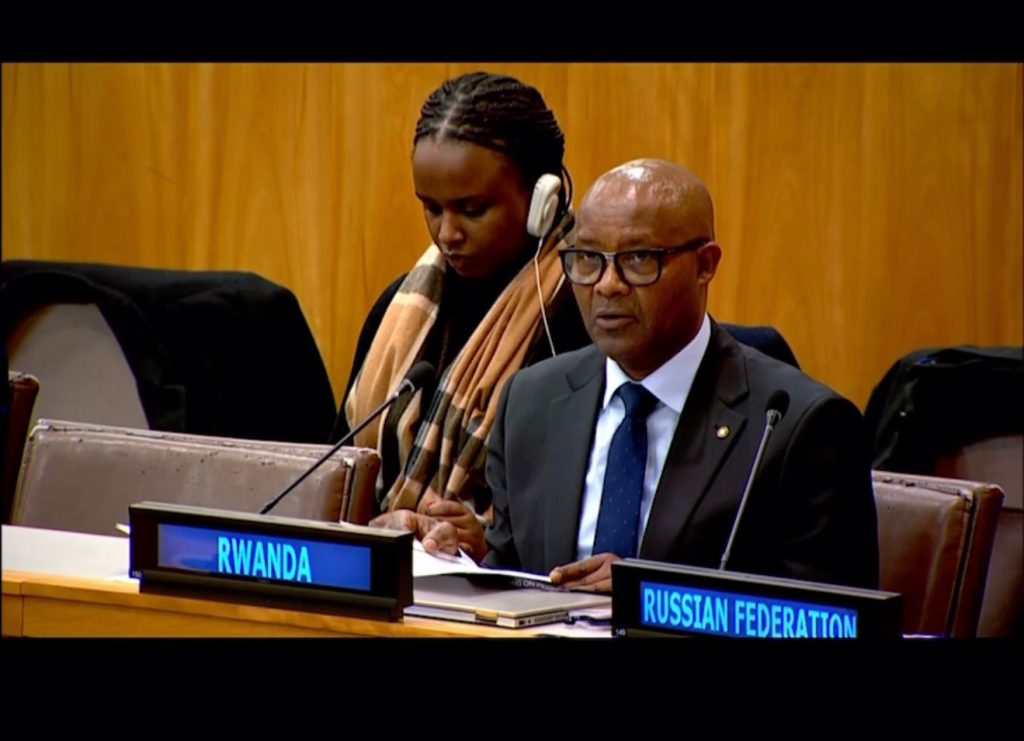
Rwanda’s Military Adviser to the UN, Col. Deo Mutabazi
Rwanda has called on the United Nations to take decisive action against the increasing use of hate speech, cautioning that inaction risks being interpreted as endorsement or complicity.
Speaking during a session of the UN Special Committee on Peacekeeping Operations on February 18, 2026, Rwanda’s Military Adviser to the UN, Col. Deo Mutabazi, warned that inflammatory rhetoric is rarely accidental. Instead, he described it as a deliberate and organized process that often lays the groundwork for large-scale violence, including genocide.
According to Col. Mutabazi, history demonstrates that mass atrocities do not erupt spontaneously. They are frequently preceded by systematic campaigns that dehumanize targeted communities and normalize discrimination. He emphasized that genocidal crimes originate from ideologies that are carefully cultivated over time.
Reflecting on Rwanda’s own experience, he reminded UN member states that the 1994 Genocide against the Tutsi was preceded by sustained propaganda and rhetoric designed to strip victims of their humanity. Such narratives, he noted, were instrumental in creating the conditions that allowed extermination to unfold.
Col. Mutabazi further stressed that hate speech must not be shielded under the guise of freedom of expression. While freedom of speech is a protected right, he argued, it cannot extend to incitement or language that systematically undermines the rights and dignity of others.
He cautioned that continued silence from the international community, particularly from multilateral institutions, risks being perceived as tacit approval. In situations where vulnerable populations face escalating hostility, failure to respond may contribute to further marginalization and violence.
Reaffirming Rwanda’s position, Col. Mutabazi stated that the country remains firmly committed to countering hate-driven narratives and urged UN member states to reject any rhetoric that denies individuals or groups their fundamental right to life. He underscored that protecting populations at risk is a shared responsibility of the international community.
Rwanda’s appeal comes amid reports of escalating hate speech in the Democratic Republic of Congo, particularly targeting Congolese citizens who speak Kinyarwanda and members of the Tutsi community. Some of the rhetoric has reportedly been echoed by public officials.
Statements attributed to Congolese political figures, including Member of Parliament Justin Bitakwira and former FARDC spokesperson Gen. Maj. Sylvain Ekenge, have drawn criticism. Observers note that no judicial proceedings have been initiated in relation to these remarks.
The rhetoric has coincided with intensified military operations in areas largely inhabited by Congolese Tutsi communities, including Minembwe Commune in South Kivu Province, where airstrikes and drone attacks have been reported.
Rwanda has indicated that it has raised concerns with the international community but says no substantive response has yet been provided.