

30 white rhinos translocated to Rwanda from S.A
Admin
Thirty wild white rhinos have been successfully translocated from South Africa to Rwanda in the largest-ever single translocation effort, aimed at establishing a new stronghold for the species in Akagera National Park
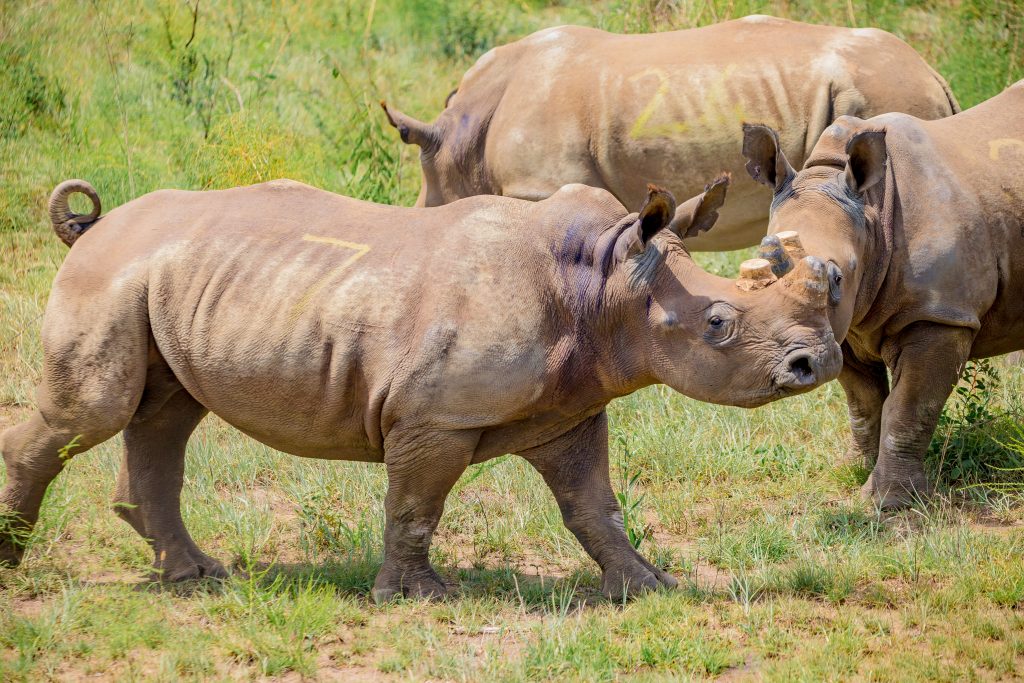
In the largest single rhino translocation ever undertaken, 30 white rhinos have been introduced to Akagera National Park in Rwanda, sourced from andBeyond Phinda Private Game Reserve in South Africa. Announced on Monday November 29th, the translocation was carried out through collaboration between the Rwanda Development Board, African Parks and andBeyond, with funding provided by the Howard G. Buffett Foundation.
This historic initiative aims to extend the white rhino range and create a secure new breeding stronghold in Rwanda, supporting population growth to ensure the long-term survival of the species in the wild as high-levels of poaching continue to exert unsustainable pressure on current populations. The translocation will also help to enhance Akagera’s contribution to Rwanda’s wildlife economy, ensuring that the conservation of their outstanding natural landscapes generates long-term benefits for local communities and all Rwandans.
Sourced from and Beyond Phinda Private Game Reserve, set within the Mun-Ya-Wana Conservancy in South Africa, 30 rhinos were flown to Rwanda and transported to Akagera National Park on November 27th. Their journey covered a total distance of over 3,400 kilometers and forms the largest single rhino translocation in history. The rhinos will be monitored daily in Akagera by a dedicated team and a specialist veterinarian who will be overseeing their acclimation.
“Introductions to safe, intact wild landscapes are vital for the future of vulnerable species like white rhino, which are under considerable human-induced pressures,” said African Parks’ CEO Peter Fearnhead. “We’re grateful to our partners for making this historic translocation possible – the Rwandan Government for their forward-thinking conservation leadership, and the Howard G. Buffett Foundation and Beyond for their integral support. Successes in parks like Akagera in Rwanda and Phinda in South Africa demonstrate how preventing the decline of nature propels prosperity and development.”
White rhinos are classified as near threatened with numbers declining across existing strongholds, largely due to poaching driven by demand for their horns. The introduction of southern white rhinos to Akagera expands their range to offer more safe area for the species. The successful conservation management of Phinda in South Africa makes the reserve a valuable source for important new rhino subpopulations.
“We have meticulously managed and grown the rhino population at Phinda over 30 years,” says Simon Naylor, andBeyond Phinda Conservation Manager. “This has been recognized in many ways, including being selected as the first private reserve to receive animals as part of the WWF Black Rhino Range Expansion Project in 2004. We are dedicated to ensuring the survival of the species throughout Africa and are proud to have provided healthy rhino, as well as volunteered our translocation skills, to help boost the creation of a new breeding cluster in Akagera.”
In 2010, the Rwanda Development Board and African Parks partnered to manage Akagera, transforming the park into one of the most coveted wildlife destinations in Africa and a sustainable revenue source for the region’s communities. Law enforcement was overhauled and robust community programs put in place, allowing for wildlife to increase and for key reintroductions to occur, such as lions in 2015 and black rhinos in 2017 and 2019. To ensure that this new population of white rhinos also flourishes, each rhino has been fitted with a transmitter to enable constant monitoring by dedicated tracking teams; a canine anti-poaching unit and helicopter surveillance are also in place to provide further support for their long-term protection.